
Agave 101
Meet the plant built for dry country
What exactly is an agave?
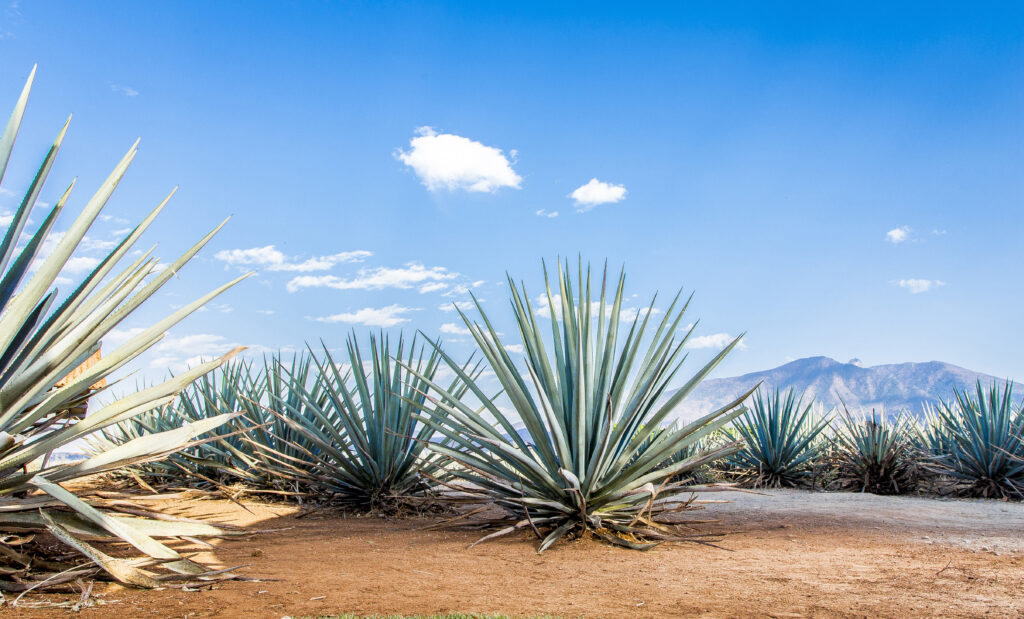
Agave is a genus of succulent perennial plants in the asparagus family, Asparagaceae. The plants grow as rosettes: layers of thick leaves radiating from a short central stem. Depending on the species, a rosette may be compact and architectural or several metres wide.
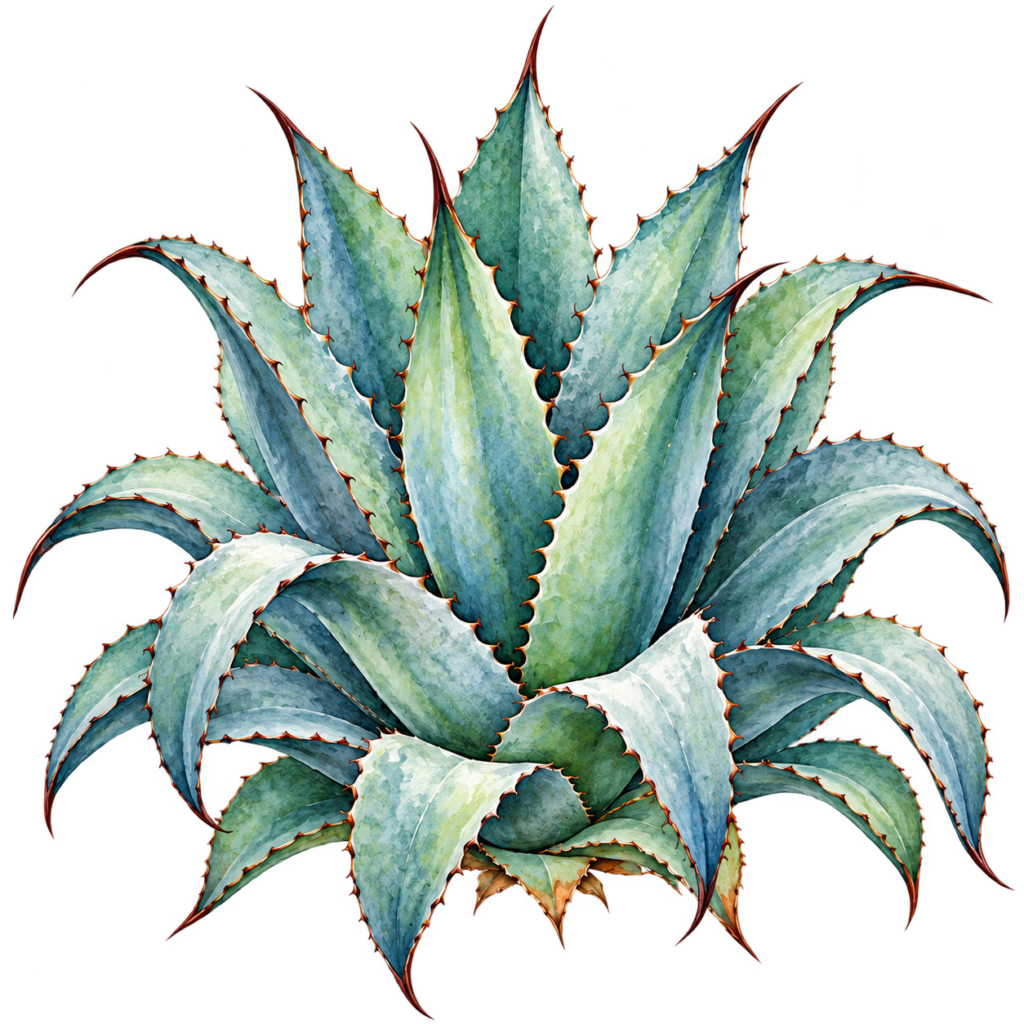
Agaves are often mistaken for cacti or aloes, but they are neither. Their fleshy leaves store water and carbohydrates, while waxy surfaces and, in many species, spines help protect the plant in exposed environments.
Born in the Americas
The natural range of agave stretches from the south-western United States through Mexico and Central America, across parts of the Caribbean and into northern South America. Mexico is the great centre of agave diversity and culture, home to most of the world’s species.
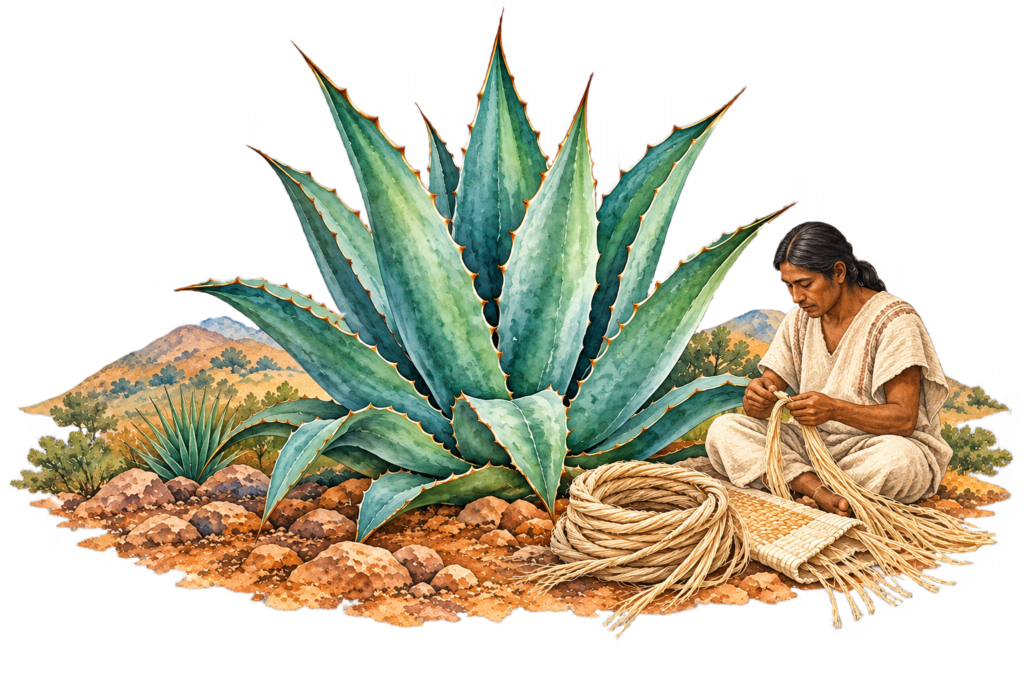
For thousands of years, Indigenous peoples of the Americas have selected, cultivated and used agaves for roasted food, sweet sap, fermented drinks, fibre, tools, medicine and ceremony. People later carried agaves around the world; today they are familiar across Australia, Africa, Asia and the Mediterranean as ornamentals, fibre crops and naturalised plants.
Built differently: agave’s water-wise strategy
Most crop plants open microscopic pores in their leaves during the day to take in carbon dioxide. In hot, dry weather, that can also mean losing valuable water. Many agaves use Crassulacean Acid Metabolism, or CAM. This means they open their pores (stomata) mainly at night, when the air is cooler, capturing carbon dioxide and storing it temporarily. During daylight, the pores can stay more tightly closed while sunlight powers photosynthesis to use the stored carbon to build the plants cells.
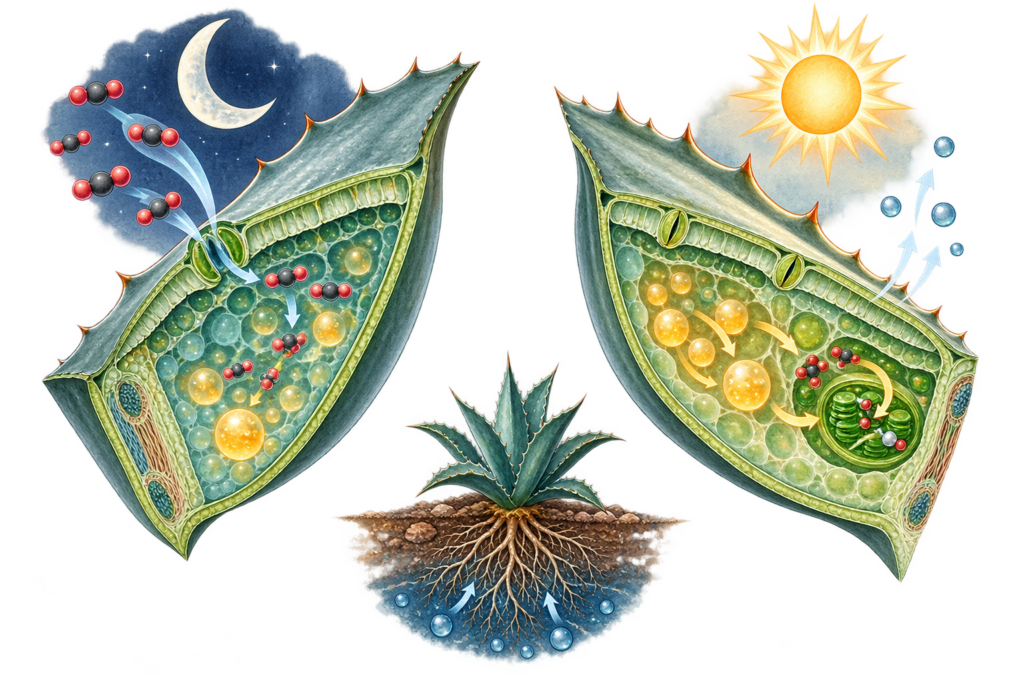
This “night shift” helps agave use water very efficiently. It does not mean the plant needs no water: young plants still need moisture to establish, though for agave, prolonged waterlogging can damage roots. Ultimately growth and yield depend on rainfall, soil, temperature, genetics and management as a holistic ecosystem.
One long life, and one spectacular flower
Agave plays the long game. For years, the rosette builds leaves (also known as pencas) and stores carbohydrates in its stem (known as the piña) and tissues. As it approaches maturity, growth begins to plateau and the plant prepares for one enormous reproductive effort.
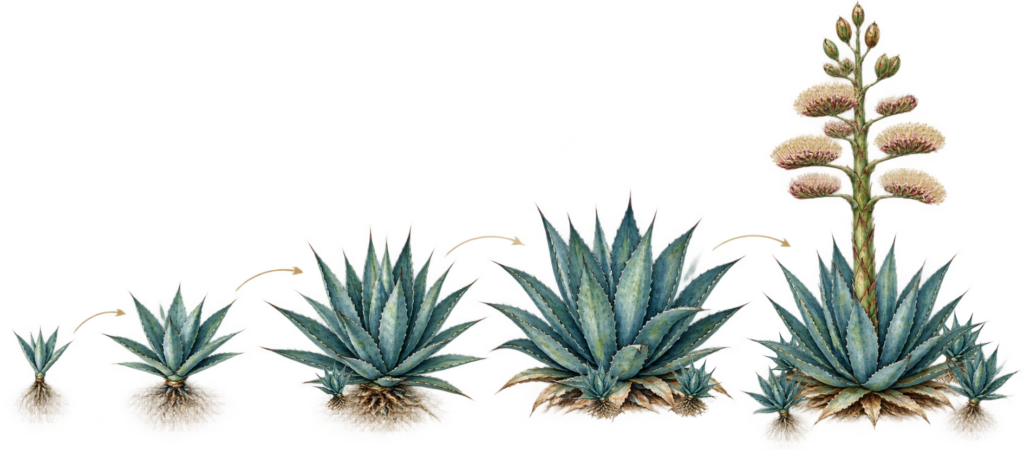
A flowering stalk, called a quiote in Mexico, rises from the centre of the rosette and can tower over the plant, carrying nectar-rich flowers visited by bats, birds and bees. After flowering and setting seed, the original rosette usually dies. Botanists call this life strategy monocarpic: flowering once in a lifetime. The genetic individual often continues, though, through offsets, or “pups”, around the parent, and small plantlets called bulbils on the flower stalk.
Four ways to make the next generation
Seed
Sexual reproduction creates genetic diversity, invaluable for conservation and breeding, but seedlings can be variable and slower to standardise for commercial fields.
Pups (hijuelos)
Offsets arise from the base or underground stems. They are clones of the parent and can be separated and replanted once sufficiently developed.
Bulbils
Some agaves form miniature clonal plants on the flowering stalk. These can detach and establish as new plants.
Tissue Culture
Small pieces of selected plant material are multiplied under controlled conditions, producing large numbers of uniform plants from valuable genetics.
Adapted in place: Where agave grows
Agave is famous for its adaptation to dry country, but the genus spans far more than desert. Different species occur in desert scrub, seasonally dry forest, grassland, rocky slopes, highlands and subtropical environments. As a group, agaves tend to favour sunlight and free-draining soil, and many tolerate heat, lean soils and long dry periods. Some are cold hardy; others are damaged by frost.
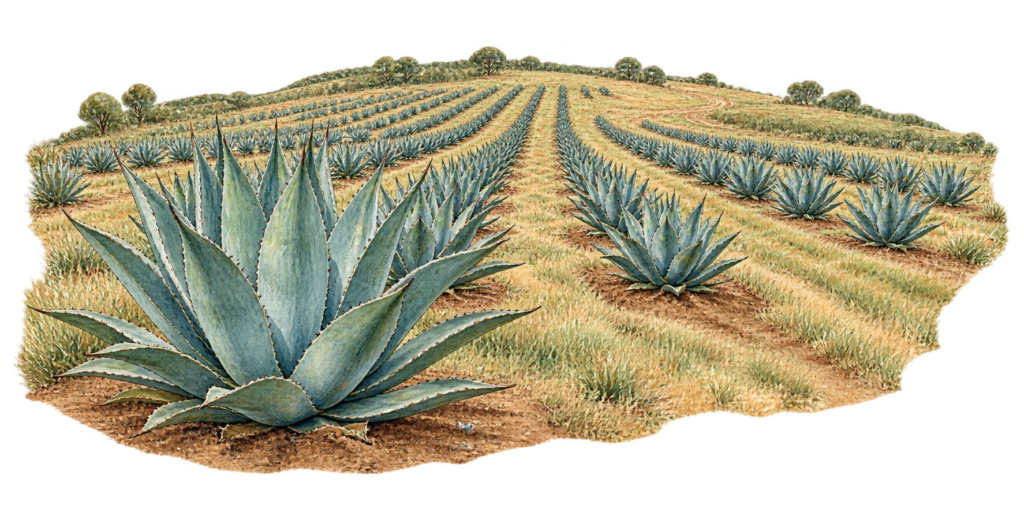
For growers, the rule is simple: species, genetics and site must be aligned. A plant that survives is not automatically a productive crop, and a climate suitable for one agave may be unsuitable for another.
A practical climate checklist
- Sunlight: most productive agaves prefer open, high-light positions.
- Drainage: free-draining profiles reduce the risk of root and crown problems.
- Rainfall pattern: total rainfall matters, and so do seasonality, intensity and long wet spells.
- Temperature: heat tolerance and frost tolerance differ markedly among species and cultivars.
- Establishment: young plants have shallower reserves and need more careful moisture and weed management.
- Purpose: the best ornamental, fibre, spirit or biomass plant may not be the same variety.
Meet the agaves
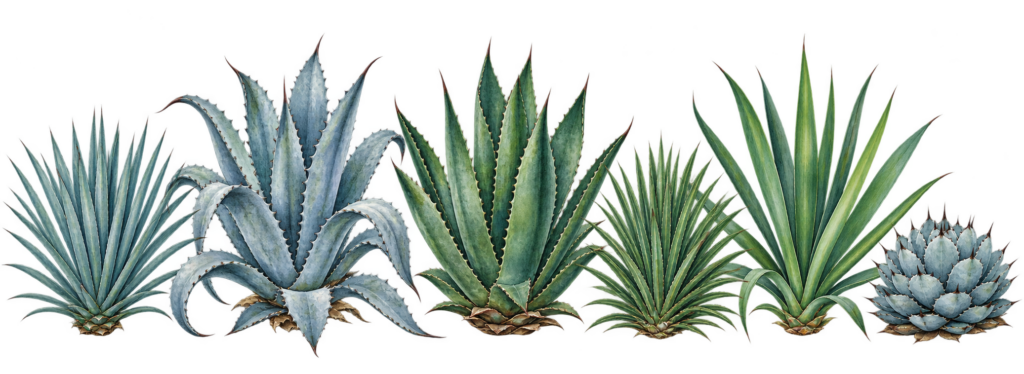
Agave is not a single crop with a single shape. Species differ in size, colour, leaf form, climate tolerance, chemistry and traditional use. These six introduce the range, and the species most relevant to ARA’s story.
Blue agave
Agave tequilana – the sugar specialist
Selected over generations for a heavy central stem and high sugar content. Australia’s best-established commercial agave and a leading candidate for early plantation development.
Century plant
Agave americana – the biomass builder
A large, powerful rosette with broad leaves. High biomass potential and useful cold hardiness in selected material; chemistry and processing require careful evaluation.
Maguey pulquero
Agave salmiana – the highland giant
A very large, upright agave with a deep cultural association with pulque. A high-biomass candidate of interest for cooler or more challenging regions.
Espadín
Agave angustifolia – the versatile cultivar
A narrower-leaved, adaptable species closely associated with mezcal, with numerous cultivated forms. Commercially familiar, with potential for variety development.
Sisal
Agave sisalana – the fibre workhorse
A sword-leaved agave moved through tropical regions for strong leaf fibre. It shows that agave can support large agricultural industries beyond spirits and sugar.
Artichoke agave
Agave parryi – the cold-country spirit agave
A compact, blue-grey agave valued for premium spirits, traditional food and ornamental planting. ARA is growing A. parryi for its potential as a prized alcohol agave and its suitability to cooler landscapes.
Agave in Australia: from curiosity to crop
Agaves have grown in Australian gardens, roadsides and small commercial plantings for decades. The next chapter is to commercialize them as crops: selecting the right genetics, producing healthy planting material, adapting plantation design, developing mechanization, and connecting each harvest to a valuable market.
Agave Resources Australia is building that platform through research, propagation, field trials and grower partnerships. Our focus is not simply whether agave can survive here, but where it can perform, and how Australian production can serve food, fibre, feed and low-carbon fuel markets.
FAQ
Is agave a cactus?
No. Agaves and cacti are different plant groups. Agave belongs to the asparagus family, Asparagaceae.
How long does agave take to grow?
It depends on species, genetics, climate and purpose. Commercial harvest may occur before natural flowering; wild and ornamental species can take from several years to several decades to mature.
Does agave need water?
Yes, especially during establishment. CAM photosynthesis helps mature plants use water efficiently, but rainfall and soil moisture still affect growth and yield.
Does every agave make tequila?
No. Tequila is made from one species, Agave tequilana, and must meet Mexican denomination rules. Other agave species are used for mezcal, fibre, food and many other purposes.
Is agave invasive in Australia?
Some agave taxa can naturalise, and their status differs by species and jurisdiction. Plant identification, responsible propagation and local biosecurity guidance all matter.